
TMJ & Facial Pain Management
Occlusal Orthotic Device
A precision-engineered, 3D-printed therapeutic appliance that repositions your jaw into its most balanced position — designed with a digital virtual articulator and fabricated in-house by Dr. Firas Albadran, DDS.
Schedule a Consultation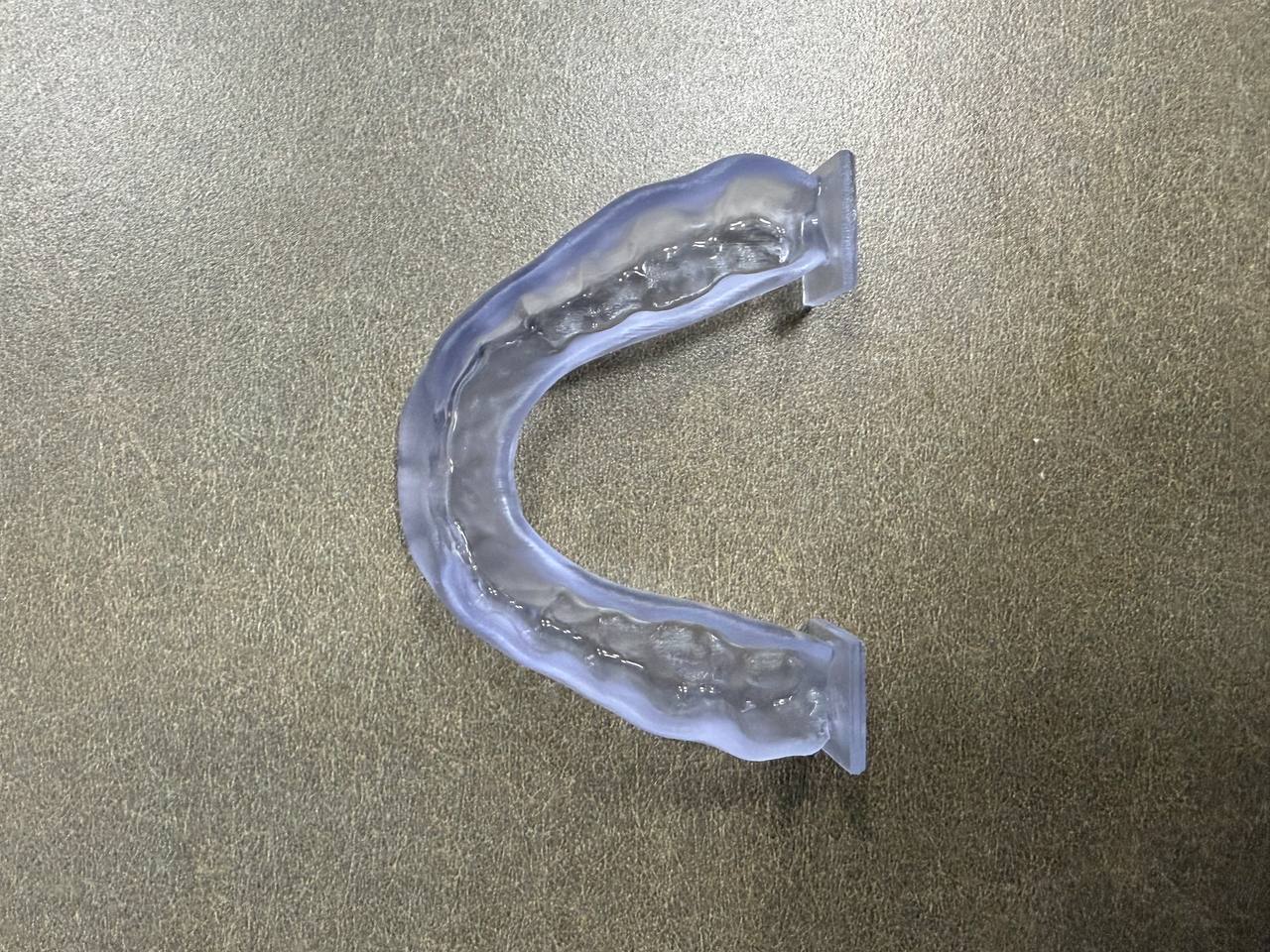
Custom 3D-printed occlusal orthotic — fabricated in-house at Richmond Dental Spa
About the Device
What Is an Occlusal Orthotic Device?
The D7880 Occlusal Orthotic Device is a custom-fabricated appliance designed to treat TMJ (temporomandibular joint) disorders, bruxism (teeth grinding), and bite issues requiring jaw stabilization.
Unlike over-the-counter guards, this is a precision-engineered therapeutic device — every contact point, thickness, and bite plane angle is intentionally designed around your specific condition and jaw relationship.
Why It Matters
Your Jaw Is Working — Even When You’re at Rest
Most people don’t realize that an incorrect jaw position doesn’t just cause pain when you chew — it keeps your facial muscles working constantly, even when you’re completely at rest.
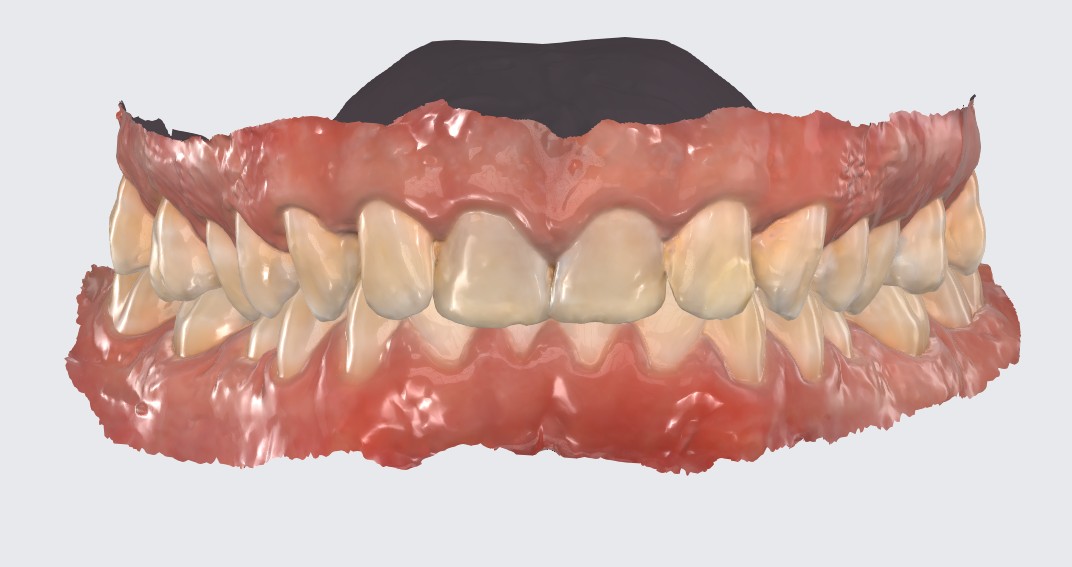
Deep bite — upper teeth excessively overlapping lower teeth
The Deep Bite Problem
With a deep bite or significant overbite, the upper front teeth excessively overlap the lower teeth, forcing the lower jaw to sit further back than it should.
The masseter, temporalis, and pterygoid muscles must compensate continuously — even while you’re sitting completely still. There is no “off switch” because the jaw never reaches a naturally balanced resting position.
The Result of Constant Muscle Overload
- Chronic facial fatigue — jaw feels tired even without chewing or talking
- Difficulty opening the mouth — muscles already partially exhausted
- Impaired chewing — muscles fatigue rapidly, making meals uncomfortable
- Tension headaches and neck soreness — compensatory strain spreading beyond the jaw
- Sleep disruption — body cannot fully relax facial musculature during rest
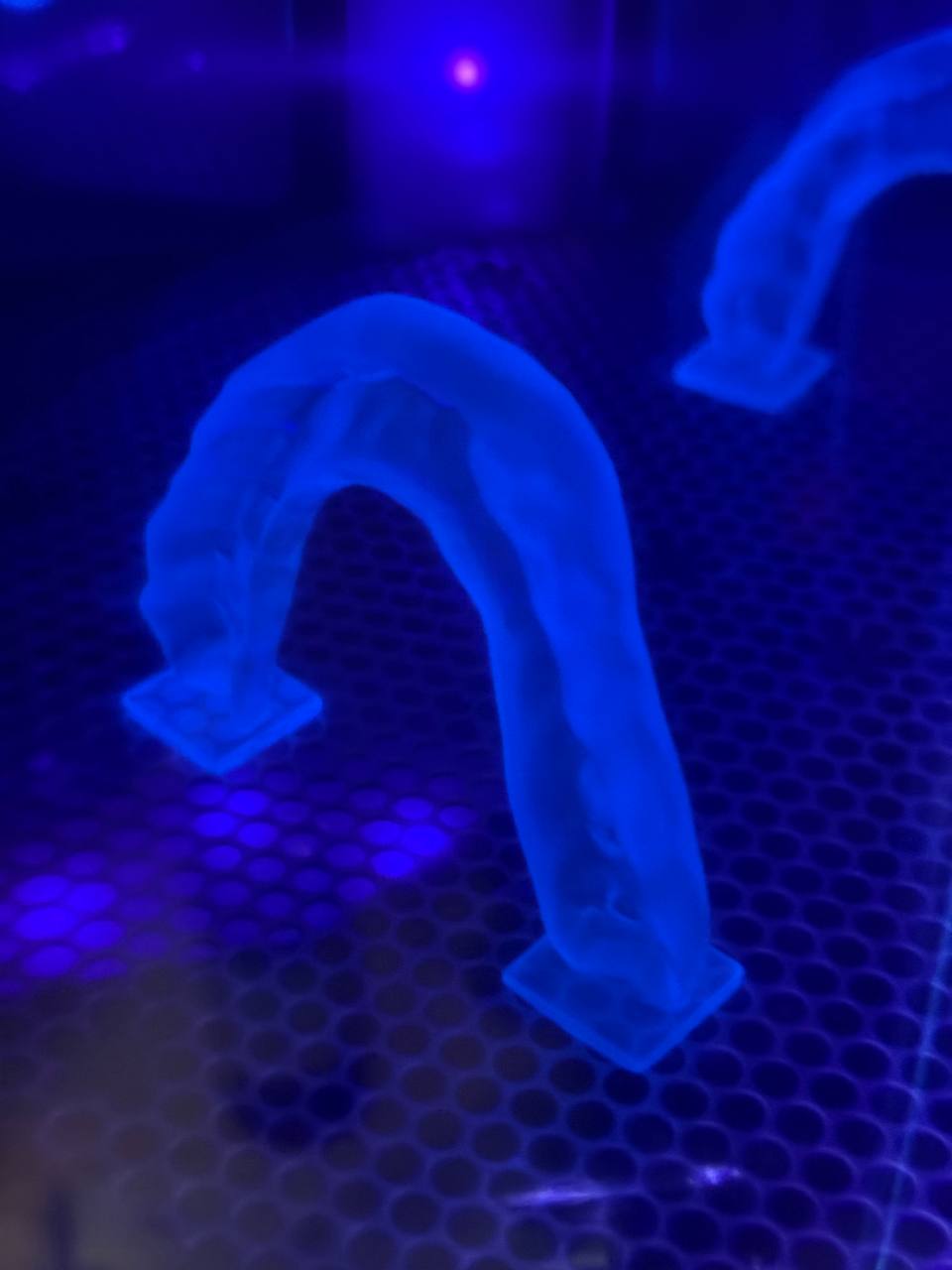
UV post-curing — in-house fabrication process
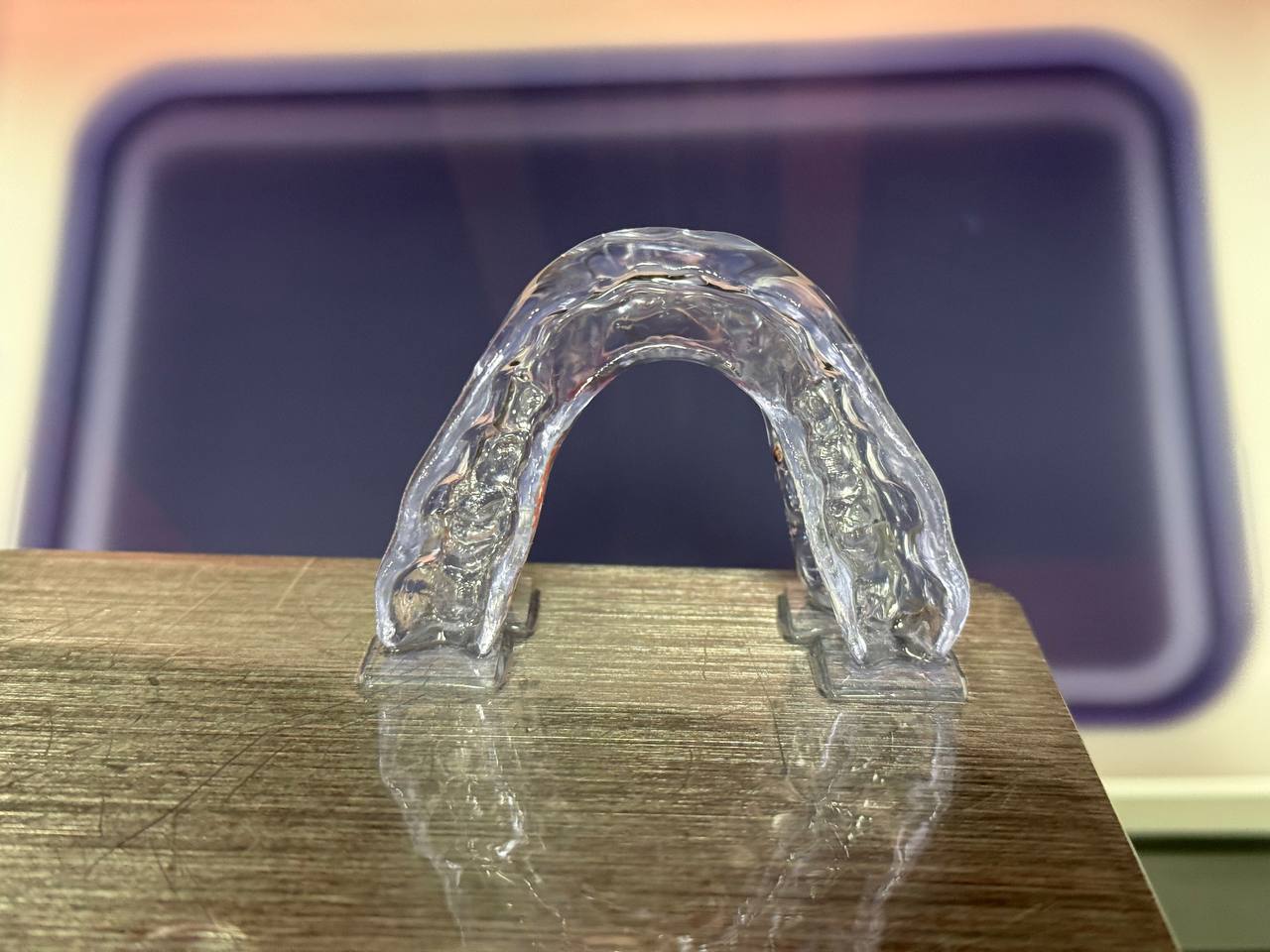
Individual custom-fitted orthotic before delivery
Dr. Albadran’s Approach
Centric Relation Registration
What sets this treatment apart is the science behind how the orthotic is positioned. Dr. Albadran fabricates each device to place the lower jaw in Centric Relation (CR) — the most physiologically stable, musculoskeletally balanced position of the jaw joint.
| Reproducible | Re-established precisely every time the device is seated in your mouth |
| Muscle-Seated | Achieved through neuromuscular deprogramming, not passive bite registration |
| Force-Balanced | Distributes occlusal forces evenly, reducing strain on the TMJ and surrounding muscles |
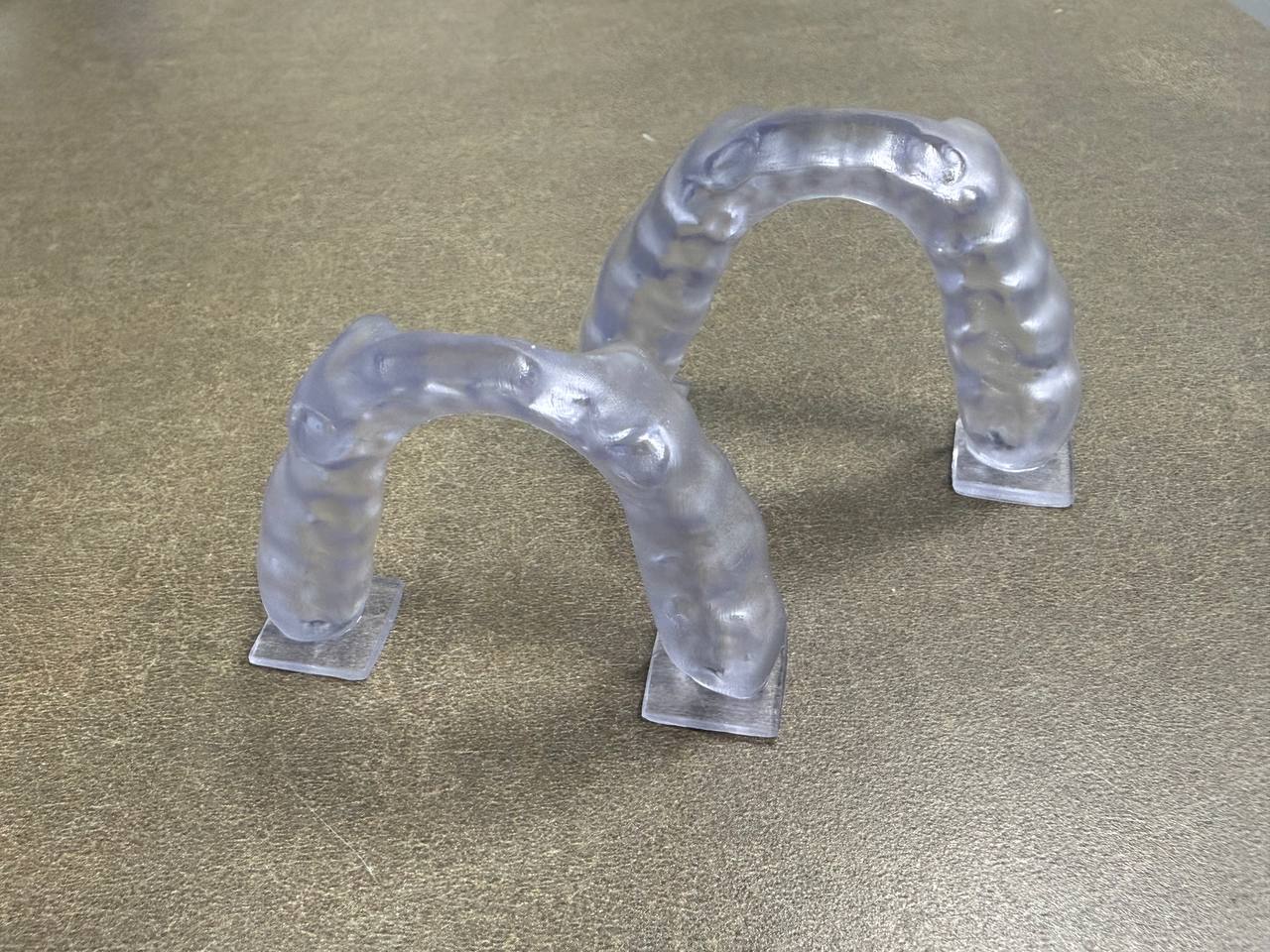
Multiple custom orthotics fabricated in-house — each uniquely designed for the individual patient
The orthotic repositions the lower jaw into this verified position, allowing the muscles of the face to finally disengage from their constant compensatory state. Patients frequently report that even within the first nights of wear, the sensation of facial tightness and morning fatigue begins to diminish.
The Science Behind the Design
Why the Lower Jaw — Not the Upper
Most appliances are made for the upper jaw. Understanding the science of sleep anatomy explains why Dr. Albadran takes a different approach — and why it matters for your health.
Your Mandible Does All the Work
Your jaw has two parts. The upper jaw — called the maxilla — is fixed. It is fused to your skull through fibrous sutures and never moves. The lower jaw — the mandible — is the only part of your face that moves. It opens, closes, shifts side to side, and makes thousands of micro-adjustments every night while you sleep.
When Dr. Albadran designs your orthotic for the lower arch, he is working with the jaw that actually drives both the problem and the solution. An appliance placed on the upper arch sits on a bone that cannot move and cannot correct the jaw relationship causing your pain.
Your Mandible Keeps Your Airway Open While You Sleep — And Your Orthotic Should Never Restrict It
Research published in Frontiers in Sleep (Martinot & Pépin, 2023) found that the central nervous system uses the mandible as a fine-tuning lever during sleep — making tiny jaw movements, just a few tenths of a millimeter, to keep the throat airway open with every breath. These movements are controlled by the trigeminal nerve and perfectly timed with your breathing cycle.[1]
When Dr. Albadran designs your orthotic, he uses a digital virtual articulator — a software simulation of your jaw’s complete range of motion in three dimensions. Every lateral shift, every protrusive path, every excursive movement is mapped and accounted for before fabrication begins. The result is a device that establishes your bite dynamically rather than freezing it in a single static position.
Your Nose Is the Switch for Deep Sleep
Researchers at the University of Lyon (Scientific Reports, Nature Publishing Group, 2021) discovered that airflow pressure through the nose directly activates receptor cells in the olfactory system — the part of the brain connected to smell — which then sends signals into deeper brain regions that control sleep depth.[2]
This is how your body transitions into Non-REM slow-wave sleep (Non-Rapid Eye Movement sleep — the deepest, most restorative sleep stage, commonly abbreviated as NREM). The pattern and pressure of nasal airflow is not just about breathing. It is the physical trigger for your brain to shift into deep, restorative sleep.
Your Upper Face Cools Your Brain While You Sleep
Inside your cheekbones and behind your nose sit your paranasal sinuses — air-filled spaces lined with moist mucous membrane. Research published in Medical Hypotheses (2011) describes human paranasal sinuses as natural radiators of the brain: as air moves through these spaces during sleep, moisture evaporates from the sinus lining, cooling the blood in surrounding vessels.[3]
That cooled blood transfers to the membranes surrounding the brain — the dura mater — quietly lowering brain temperature and supporting the transition into deep sleep. This mechanism is known as Selective Brain Cooling (SBC) — selective because it targets the brain specifically, not the whole body.
Research confirms that SBC is most active precisely during NREM deep sleep — the same window when you are wearing your orthotic.[4] The upper jaw (maxilla) forms the floor of the nasal cavity and houses the largest of these sinuses — the maxillary sinuses — placing it at the center of this cooling architecture.
Designed Around the Science of Sleep
Understanding how the upper jaw, nasal cavity, and paranasal sinuses contribute to airway function, brain cooling, and deep NREM sleep informs how Dr. Albadran approaches every orthotic design. By positioning the device on the lower jaw only — the only jaw that moves — the upper arch and its surrounding anatomy remain completely undisturbed.
The nasal airflow pathway, the sinus ventilation system, and the brain’s natural cooling mechanism all continue to function as your body intended — throughout every hour of sleep.
Research Sources
frontiersin.org/journals/sleep/articles/10.3389/frsle.2023.1145620/full
nature.com/articles/s41598-021-86525-3
sciencedirect.com/science/article/abs/pii/S0306987711004142
sciencedirect.com/science/article/abs/pii/S0306456504001597
The Biological Philosophy
A Whole-Body Connection — Not Just an Appliance
Dr. Albadran practices from a holistic biological dental philosophy — a framework that views the mouth not as an isolated structure but as a gateway connected to your airway, your nervous system, your sleep quality, and your overall systemic health. Your orthotic is not simply a therapeutic tool inserted between your teeth — it is a precisely engineered device designed with the understanding that your jaw, your airway, your sleep, and your nervous system are not separate problems. They are one connected system.
What This Means for Your Treatment
- Jaw joint stability — repositioned into its most stable musculoskeletal position using Centric Relation
- Mandibular freedom — designed dynamically so natural airway-protection movement is never restricted
- Upper arch preserved — nasal airflow, sinus ventilation, and brain cooling pathways left completely undisturbed
- Muscle decompression — chronic compensatory tension in the neck, head, and nervous system allowed to release
- Restorative sleep — the conditions your body needs to reach deep NREM sleep are supported, not compromised
- Material safety — only biocompatible, biologically vetted materials approved for long-term oral contact
Medical-Grade Materials
Because What Touches You Matters
In biological dentistry, the question is never just what does the device do — it is also what is the device made of. Every material that enters your body matters. Dr. Albadran selects only materials that meet the highest standards of safety, biocompatibility, and regulatory clearance.
Regulatory Clearance
Every orthotic at Richmond Dental Spa is printed using KeySplint Soft by Keystone Industries — one of only a handful of 3D-printed dental resins to have received FDA 510(k) clearance in the United States.
The FDA 510(k) process means the U.S. Food and Drug Administration independently reviewed and confirmed this material is safe and effective for use as a medical-grade appliance inside the human mouth.
- USA — FDA 510(k) Cleared
- EU — CE Marked, Class IIa
- Canada — Health Canada Approved
- Australia — TGA Cleared
Biocompatibility
Traditional dental acrylic — used in most conventional night guards — contains methyl methacrylate (MMA), a chemical monomer known to cause sensitivity reactions and which has raised questions in the context of long-term biological exposure.
KeySplint Soft contains none of the following:
- BPA (bisphenol A) — a synthetic compound linked to hormonal disruption concerns
- MMA (methyl methacrylate) — a chemical sensitizer found in conventional acrylic resins
- Phthalates — plasticizing compounds associated with biological safety concerns
For a practice built on the principle that the mouth is connected to the whole body, material selection is not a footnote. It is part of the treatment.
Performance
Unlike rigid acrylic appliances, KeySplint Soft was engineered to combine structural strength with natural flexibility — a combination previously unavailable in 3D-printed dental materials.
- Bruxism-resistant — durable enough to withstand full grinding forces night after night
- Elastic memory — returns to its precise calibrated shape after each use
- Flexible comfort — adapts to tooth surfaces without pressure points
- Abrasion & fracture resistant — built for years of consistent wear
- Transparent & stain-resistant — discreet and easy to clean
- Made in the USA
Material: KeySplint Soft by Keystone Industries · keyprint.keystoneindustries.com/keysplint-soft
See It in Action
Design, Virtual Articulator & Fabrication
Watch how Dr. Albadran designs your occlusal orthotic using a digital virtual articulator and fabricates it in-house with precision 3D printing.
Is This for You?
Common Symptoms We Treat
Your Treatment Journey
What to Expect — Step by Step
Comprehensive Evaluation
Dr. Albadran assesses your TMJ health, bite, muscle tenderness, and jaw range of motion.
Digital Impressions
Advanced intraoral scanning captures precise records of your teeth and bite — no messy putty molds.
CR Bite Registration
A muscle-deprogrammed Centric Relation record locates your jaw’s most stable therapeutic position.
Virtual Articulator Design
Your bite is mapped dynamically in three dimensions using a digital virtual articulator — ensuring mandibular freedom is preserved in every direction of movement.
In-House 3D Printing
Your device is fabricated on-site using FDA-cleared KeySplint Soft resin — no outside lab, no delays.
Delivery & Calibration
The orthotic is fitted, adjusted, and verified for balanced occlusal contacts at every contact point.
Follow-Up Adjustments
Progressive recalibration ensures your jaw continues settling into its ideal therapeutic position over time.
Clinical Benefits
Why Patients Choose This Treatment
Pain Relief
Reduces or eliminates jaw pain and facial muscle soreness
Tooth Protection
Guards against grinding-related enamel wear and tooth fractures
TMJ Decompression
Reduces joint inflammation and eliminates clicking and popping sounds
Muscle Recovery
Allows chronically overworked facial muscles to finally rest and heal
Sleep Quality
Supports unobstructed nasal airflow and the body’s natural deep sleep mechanisms
Restorative Planning
Establishes a stable jaw position as the foundation for any future dental work
Insurance Coverage: Most dental plans cover 50–80% of the D7880 code. Medical insurance may also apply. Our team will verify your benefits before treatment begins — no surprises.
Not a Candidate for an Orthotic?
There Is Another Path
An occlusal orthotic is the ideal first-line solution for most patients — but we understand that not everyone can tolerate an appliance inside their mouth. A strong gag reflex, severe dental anxiety, or significant oral sensitivity can make wearing any device genuinely difficult.
You may be a candidate for an alternative if you experience
- Significant gag reflex — difficulty tolerating anything on the palate or back teeth
- Severe dental anxiety — appliance wear creates psychological distress
- Oral sensitivity — heightened tactile response to intraoral devices
- Bruxism and clenching — without structural bite correction needs
- Jaw muscle hypertrophy — enlarged masseter or temporalis muscles from chronic overuse
- Tension headaches and muscle strain — orofacial muscle pain without significant joint involvement
Neurotoxin Administration for Jaw Muscle Relief
For patients who cannot tolerate an intraoral appliance, targeted neurotoxin injections into the masseter, temporalis, and related jaw muscles offer a highly effective non-appliance path to relief from clenching, bruxism, muscle hypertrophy, and tension-related facial pain.
- → No intraoral device required
- → Reduces muscle hyperactivity at the source
- → Relieves clenching, bruxism, and jaw muscle strain
- → Can reduce masseter hypertrophy (jaw slimming)
- → Complements orthotic therapy when used together
Not sure which path is right for you? Dr. Albadran will evaluate both options at your consultation.
Ready to Find Relief?
Stop Living With Jaw Pain
Dr. Albadran will evaluate whether an Occlusal Orthotic Device is the right first step toward lasting relief for you.
Richmond Dental Spa · 9305 Quioccasin Rd, Suite A, Richmond, VA 23229 · richmonddentalspa.com
This page is for patient education purposes only and does not constitute medical advice. Individual results vary. A comprehensive clinical evaluation by Dr. Albadran is required to determine appropriate treatment. Insurance coverage varies by plan.